If you’re running a commercial or industrial facility that relies on an electric steam boiler, you already know how critical it is for keeping operations smooth—no downtime, no missed deadlines, no costly disruptions. As an electric steam boiler supplier, I’ve seen firsthand how small oversights can turn a routine maintenance check into a full-blown shutdown that costs thousands of dollars (and way more stress than anyone wants to deal with). Over the years, I’ve worked with hundreds of clients to troubleshoot and keep their boilers running nonstop, and today I’m breaking down the real, actionable steps you can take to make sure your boiler never lets you down. Electric Steam Boiler
First, let’s start with something that seems obvious but is often skipped: regular, scheduled maintenance—not just the “fix when it breaks” kind. I can’t tell you how many clients have called me in a panic at 2 a.m. because their boiler died during a production run, only to find out they’d put off cleaning the heating elements for six months. Electric steam boilers rely on those elements to heat water to steam, and mineral buildup from hard water coats them like a layer of scale, right? That scale acts like an insulator, so the elements have to work way harder than they’re designed to, which leads to overheating, premature wear, and even burnout. So here’s the rule: every 3 to 6 months, depending on your water quality, pull those elements out and give them a good descale. Use a food-grade descaling solution (we actually carry a custom one that works perfect with our boilers, but any industrial descaler will do) and a soft brush—no abrasive scouring pads, those can scratch the elements and cause leaks.
Then, don’t sleep on checking the pressure and temperature sensors. These little guys are the “eyes” of your boiler. If a temperature sensor is off by even 10 degrees, the boiler will either overheat (blowing a pressure relief valve) or run too cold (wasting energy and not producing enough steam). I recommend calibrating these sensors every month with a portable digital meter—you can pick one up for under $100, and it takes 10 minutes. Also, test the pressure relief valve quarterly to make sure it’s not stuck. Just lift the lever a little (don’t pull it all the way!) and listen for a faint hiss—if it doesn’t move, it’s corroded, and you need to replace it immediately. A stuck relief valve is a safety hazard, but also, if it blows unexpectedly because you didn’t test it, you’ll have steam everywhere, and that’s a nightmare to clean up.
Next, let’s talk about water quality. This is another big one that people underestimate. If your incoming water is hard (like, has high levels of calcium and magnesium), that scale I mentioned earlier builds up fast. We always advise clients to install a water softener and a reverse osmosis (RO) system before the water enters the boiler. Wait, I know—adding more equipment sounds like a hassle, but trust me, it’s way cheaper than replacing a set of heating elements ($1,200+ per set) or fixing a cracked boiler shell from mineral buildup. If you can’t install a full RO system right away, at least test your water every month with a cheap test strip—look for total dissolved solids (TDS) levels. If TDS is over 200 ppm, you need to address it. Also, make sure to drain a small amount of water from the boiler every week (called “blowdown”) to flush out any built-up minerals that didn’t get removed by the softener. Most modern electric boilers have an automatic blowdown valve, but double-check that it’s working— I’ve seen a few where the valve got clogged with scale, so it wasn’t blowing down at all.
Now, electrical components are the backbone of an electric steam boiler, right? Since there’s no gas or fuel, all the power runs through wires, contactors, and circuit breakers. Dust and moisture are the enemies here. Even a little bit of dust can build up on contactors, causing them to arc, which wears them out faster. Every 2 months, turn off the main power to the boiler (no exceptions) and use a soft, dry cloth to wipe down the control panel, contactors, and wiring connections. Don’t use compressed air unless it’s low-pressure—high-pressure air can push dust into tiny parts and cause damage. Also, check all wire connections for tightness: vibration from the boiler running can loosen wires over time, leading to loose connections that cause power drops or even fires. I always tell clients to label all wires when they open the panel, so if you have to take something apart later, you don’t mess up the wiring.
Wait, what about backup power? Let’s be real—power outages happen. If your facility can’t afford to stop production for even a few minutes, a generator is non-negotiable. But don’t just hook up any random generator—make sure it’s sized to handle your boiler’s peak load (usually 120-150% of the boiler’s wattage). I’ve had clients try to use a small portable generator that couldn’t keep up, so the boiler would trip the breaker as soon as it turned on. That’s a waste of time and money. Also, test the generator every month—start it up, let it run for 10 minutes, and make sure it connects automatically if the power goes out. A generator that’s sitting unused for a year will probably die when you need it, so don’t skip that test.
Another thing: keep a spare parts kit on hand. You don’t want to wait 3 days for a replacement heating element when your boiler is down and production is at a standstill. What should be in the kit? At least one set of heating elements (the right ones for your model), a pressure relief valve, a fuse for the control panel, and a few extra contactors. We sell pre-made kits that are tailored to each of our boiler models, so you don’t have to guess what you need. Pro tip: store the spare kit in a cool, dry place near the boiler—if it’s in a basement that floods, your spares will be ruined before you need them.
Now, let’s talk about daily checks. These don’t take more than 5 minutes a day, and they can catch small problems before they become big ones. First, listen to the boiler when it’s running. It should make a steady, low hum—if it’s clicking, buzzing, or making weird noises, that’s a sign something’s wrong. Maybe a contactor is going bad, or there’s a loose wire. Second, check the pressure gauge. It should stay within the manufacturer’s recommended range (usually 10-15 psi for small boilers, higher for larger ones). If it’s spiking or dropping, that could be a blockage in the steam line or a problem with the water level. Third, look for leaks. Even a tiny water leak around the boiler shell or pipes can lead to mold, rust, or electrical damage. If you spot a leak, tighten the fitting first—if it keeps leaking, call a tech before it gets worse.
Wait, I know some of you might be thinking, “I don’t have time for all this maintenance.” Let me be clear: a 10-minute daily check and a 1-hour monthly maintenance session is way less time than you’ll lose if your boiler shuts down unexpectedly. I had a client last year who skipped descaling his elements for 8 months—he had a burnout at 8 a.m. on a Monday, and it took his maintenance team 12 hours to replace the elements, costing him $18,000 in lost production. That’s way more than the cost of monthly maintenance.
Also, when you’re buying a new electric steam boiler, don’t just go for the cheapest one. Look for models with built-in smart features—like remote monitoring. A lot of modern boilers let you check pressure, temperature, and element status from your phone. We offer that on all our boilers, and it’s a game-changer. You’ll get a text alert if the temperature is too high, or if an element is failing, so you can fix it before it causes a shutdown. That’s not a gimmick—it’s a tool that helps you stay on top of things without being glued to the boiler 24/7.
Let me wrap this up with a few key takeaways to keep this straight: schedule regular descaling and sensor calibration, test your water quality and maintain a proper blowdown routine, keep electrical components clean and tight, have a working backup power source and spare parts kit, do quick daily checks, and invest in a boiler with smart features if you can. All of these steps work together to keep your electric steam boiler running continuously, no matter what.

If you’re worried that your current maintenance routine isn’t enough, or you’re looking to upgrade to a more reliable electric steam boiler, feel free to reach out to our team. We’ll walk you through what your facility needs, help you set up a maintenance schedule that fits your timeline, and even provide on-site tech support if you ever run into a problem. Don’t wait for a shutdown to fix things—let’s make sure your boiler keeps your operations running smoothly, every single day.
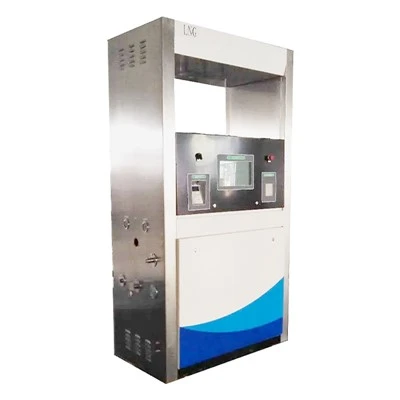
LNG Refueling Machine References
- Industrial boiler maintenance best practices, International Association of Plumbing and Mechanical Officials (IAPMO), 2022.
- Water quality guidelines for electric steam boilers, Electric Power Research Institute (EPRI), 2021.
- Electrical component reliability in commercial boilers, National Fire Protection Association (NFPA), 2020.
- Generator backup systems for industrial equipment, Occupational Safety and Health Administration (OSHA), 2023.
Xinxiang Huayuan Container Equipment Co., Ltd.
With abundant experience, we are one of the most reliable electric steam boiler manufacturers and suppliers in China. We warmly welcome you to buy durable electric steam boiler made in China here from our factory. If you have any enquiry about cooperation, please feel free to email us.
Address: No.2, South Road, Industrial Cluster Zone, Genghuang Township, Fengquan District, Xinxiang City, Henan Province
E-mail: cncd527@gmail.com
WebSite: https://www.huayuanequipment.com/
