If you’re in the market for a step up transformer, chances are you’re not just looking for a random box that boosts voltage – you need something that works for your specific gig, whether that’s powering a commercial solar array, running industrial equipment, or setting up a backup power system for a remote site. As a step up transformer supplier, I’ve seen way too many folks grab the first option they find online only to end up with something that’s either underpowered, way too bulky, or flat out dangerous. I’m writing this to skip the generic industry jargon and give you the real, no-BS stuff that actually helps you pick the right one. Step Up Transformer
First off, let’s talk basics that a lot of people skip: what even is a step up transformer? Unlike step down transformers that lower voltage for home use, these bad boys increase incoming AC voltage – say, taking a 240V input and cranking it up to 480V, or 1kV to 10kV. If you’re running long power lines, welding equipment, or integrating renewables (solar, wind), this boost is non-negotiable. But here’s the thing: not all step ups are created equal, and getting the wrong size or type can lead to overheating, wasted energy, or even damaged gear.
The first big question to ask yourself: what’s your power load? This isn’t just a guess – you need to calculate the total wattage (or kilowatts, kW) of everything you’re going to run off the transformer. Let’s break it down: if you’re powering a small shop with a 10HP motor (that’s ~7.5kW) and a few lights, your total load is around 8-10kW, so you don’t need a 50kW transformer. Wait, hold up – add a 25% buffer here. Why? Motors and other heavy machinery draw way more power when they first turn on – that’s called inrush current, and it can be 3x the normal running current. Skipping that buffer is how people blow fuses or fry the transformer a month after installation. I’ve had customers come back saying their new transformer died in two weeks because they went for the exact size of their load, no buffer. Don’t be that person.
Next, input and output voltage are non-negotiable. This isn’t just “does it go up enough” – you need the exact incoming voltage your site is delivering, and the exact outgoing voltage your equipment needs. For example, if your grid gives you 208V single-phase, you don’t want a transformer that only works with 240V input. Same goes for output: if your industrial pump needs 480V three-phase, a step up that only does single-phase is useless. Pro tip: check your utility bill or your equipment’s nameplate – that tiny sticker on the back has the exact voltage specs you need. I once had a customer who bought a transformer labeled “240V to 480V” but his input was 220V; it barely put out 440V, which wasn’t enough for his machinery. He ended up exchanging it for one rated for 208V input, and it worked perfectly.
Then there’s the type of transformer: dry-type vs. oil-filled. This is where location matters most. Dry-type transformers are sealed, no flammable fluids inside, and they run cooler, so they’re perfect for indoor use – warehouses, basements, commercial buildings where fire risk is a concern. They’re also low-maintenance, just a quick dusting every few months. Oil-filled? Those are for outdoor use, remote sites, or places where you need extra cooling for high loads. The oil acts as a coolant and insulator, so they’re more compact for big power needs, but you have to check for leaks every few years and make sure you’re compliant with local fire codes. I’d never recommend an oil-filled one for a kids’ school or an indoor retail space – the risk just isn’t worth it.
Wait, what about phase? Single-phase vs. three-phase? Most residential and small commercial uses single-phase, but if you’re running heavy industrial gear, CNC machines, or solar inverters for large arrays, you’re going to need three-phase. A lot of first-time buyers mix these up. A single-phase step up won’t power three-phase equipment, and vice versa. It’s like trying to plug a dryer plug into a standard wall outlet – it just won’t work. If you’re not sure, check your utility’s power supply: if your building has four main wires (hot, neutral, ground), it’s single-phase; if it has five, it’s three-phase. That’s a quick way to figure it out without calling an electrician (though if you’re still unsure, call one – better safe than sorry).
Now, efficiency. This isn’t just a nice-to-have – it saves you money long-term. Cheaper transformers often have low efficiency, meaning they waste more power as heat. For example, a 10kW transformer with 95% efficiency wastes 500W of power every hour, so over a year that’s ~4,380 kWh wasted – that’s like leaving a fridge running nonstop for 6 months. A 99% efficient one only wastes 100W, so that’s 876 kWh a year. The difference in your electric bill adds up fast, especially if your transformer is running 24/7 (like a solar array feeding power to the grid). As a supplier, I always tell customers to splurge a little on efficiency – it pays for itself in 1-2 years.
Another often-overlooked detail: insulation class. This is a measure of how well the transformer’s wires and components can handle heat, and it directly affects lifespan. The most common classes are A, B, F, H. Class A is basic, good for low-load indoor use where temps don’t get too high. Class F and H are for high-load or outdoor use – they can handle higher temperatures without breaking down. I’ve seen Class A transformers die in 5 years in a hot warehouse, while Class F ones last 20+ years in the same spot. It’s not a huge cost difference, but it’s a big difference in how long your transformer lasts.
Wait, what about installation and maintenance? Some transformers are plug-and-play, perfect for small DIY jobs, but most industrial ones need professional installation. Don’t try to hook up a 50kW step up by yourself – high voltage is dangerous, and a bad installation can void your warranty. Also, ask about warranty: a good transformer should have at least a 2-5 year warranty, and some premium ones have 10. If a supplier only offers a 1-year warranty, that’s a red flag – likely they cut corners on materials. As for maintenance, dry-type ones just need a visual check every 6 months, oil-filled ones need oil top-ups and leak checks annually. Factor that into your choice – if you’re in a remote site with no easy access, a low-maintenance dry-type is way better than an oil-filled one that needs yearly service.
Let’s throw a real example at you to make this concrete. Say you’re a small business owner with a 15HP industrial oven (that’s ~11kW) running in your shop, and your incoming voltage is 208V single-phase, but your oven needs 480V single-phase. Let’s run the numbers: total load is 11kW, add 25% buffer for inrush current, so 13.75kW. Your input is 208V, output is 480V, single-phase, dry-type for indoor use. That means you need a 15kW (15,000VA) dry-type single-phase step up transformer, insulated to Class F, with 98% efficiency. Skip the 10kW one, skip the oil-filled, skip the three-phase – that’s exactly what works for your setup. I’ve sold dozens of these, and they run perfectly for years.
Common mistakes to avoid: buying a transformer with a higher kVA than you need just in case (wastes money on unnecessary size), going for the cheapest option without checking efficiency (wastes cash on electric bills), mixing up phase or voltage specs (doesn’t work at all), and skipping the load buffer (dies early). I see these every single week, so take it from someone who’s been doing this for years – these little checks save you so much headache later.
Now, you might be wondering, “Where do I get all these specs, and how do I make sure I’m not buying a knockoff?” That’s where working with a reputable step up transformer supplier comes in. We don’t just sell boxes – we help you figure out exactly what you need, no sales pitch, no upselling you something too big or too small. We’ll ask you about your load, your voltage, where you’re putting it, and even help you check your local codes for installation. We also test every transformer before it leaves our warehouse, so you know it’s not damaged or mislabeled.
If you’re still unsure, don’t guess – reach out. We can walk you through every step, send you specs, answer any random question you have (even the ones you think are “too stupid” to ask, I’ve heard them all). Picking the right step up transformer doesn’t have to be stressful – it just takes a little info upfront, and that’s what we’re here for.

If you’re ready to find the perfect fit, or even just have more questions to make sure you get it right, don’t hesitate to reach out for a chat about your project. We’re here to help you avoid the mistakes that so many others make, and get a transformer that works for you, not against you.
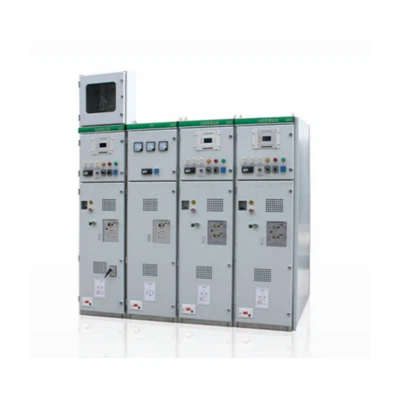
Intelligent Integrated Distribution Cabinet Reference: Electrical Transformers: Selection, Installation, and Maintenance, IEEE Press, 2021.
Huachi Electric Co., Ltd.
We’re well-known as one of the leading step up transformer manufacturers in China, featured by quality products and good service. Please rest assured to buy customized step up transformer made in China here from our factory. Contact us for more details.
Address: Plastic Park, Tongyu Street, Luqiao District, Taizhou City, Zhejiang Province
E-mail: HCDQ2026@163.com
WebSite: https://www.huachi-electric.com/
