If you’ve ever wondered what goes into the cost of replacing an electric forklift battery, you’re not alone. As an electric forklift supplier who’s worked directly with warehouse managers, fleet maintenance teams, and small business owners over the last eight years, I’ve heard this question dozens of times. The truth is, it’s not a simple number—it depends on a mix of operational needs, equipment specs, and long-term investment priorities. Let me break this down the way I do for every client who sits across my desk, no fine print, no confusing jargon. Electric Forklift
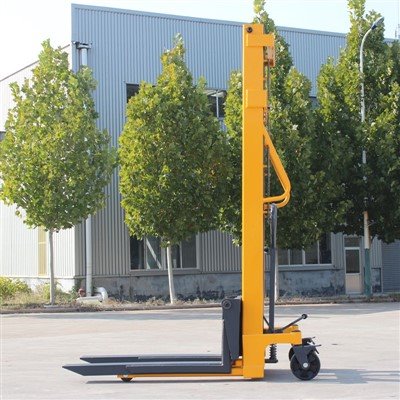
First, let’s start with the basics that most people don’t realize: electric forklift batteries aren’t one-size-fits-all. A 3,000-pound capacity forklift used for light stock in a retail distribution center needs a very different battery than a 10,000-pound model moving heavy pallets at a manufacturing facility. Our team always starts by matching the battery to the specific forklift model and daily usage, because a mismatch leads to unnecessary costs that no one sees coming.
When someone asks about replacement costs, the first figure we talk about is the upfront price of the battery itself. For most standard lead-acid electric forklift batteries—still the most common in fleets today—prices range from $1,500 for smaller 24-volt models used in light-duty applications up to $9,000 for larger 80-volt batteries built for heavy, continuous use. Lithium-ion batteries, which are growing in popularity, start around $4,000 for a 24-volt unit and go as high as $14,000 for a high-capacity 80-volt pack. But here’s the catch: that upfront number is rarely the whole story.
I remember a client from a regional grocery distributor who quoted me a price for a lead-acid battery that seemed like a great deal at first glance. But when we dug into their operations, we found that their current batteries required a full 8-hour charge plus an additional 8 hours of cooling time between shifts. They were running three shifts a day, so they needed two batteries per forklift to keep up with demand. The cheaper battery meant they were doubling their investment, plus paying for extra battery storage space in their warehouse—space that could’ve been used for pallets of food, not spare battery units. That’s the kind of hidden cost that makes upfront price a terrible way to judge value.
Then there’s the operational cost of maintaining lead-acid batteries, which is a big part of the total replacement picture. Lead-acid batteries need regular topping off with distilled water, usually once every 50 to 100 charge cycles. For a fleet of 20 forklifts running three shifts, that’s 60 to 80 topping sessions a week, plus the cost of distilled water, personal protective equipment for staff doing the work, and the time spent on the task instead of more productive work. There’s also the fact that lead-acid batteries need regular equalization charges to prevent sulfation, a process that’s done at specific intervals and ties up the battery for hours at a time. Most lead-acid batteries last between 3 and 5 years with proper maintenance, but if you skip those steps, that lifespan drops to 2 years or less.
Lithium-ion batteries change that equation almost entirely. For one thing, they don’t need distilled water, so you eliminate all that maintenance time and supply cost. They also don’t require equalization charges, and many can be opportunity charged—meaning you can top them up for 15 to 30 minutes during a break or while a pallet is being loaded, instead of waiting 8 hours for a full charge. That means many fleets can get by with one battery per forklift instead of two, which cuts down on spare battery costs and storage space. Lithium-ion batteries also typically last 5 to 8 years, sometimes even longer in light-duty use. The tradeoff, of course, is that upfront cost is higher, but when you factor in savings on maintenance, spare units, and lost productivity from waiting for batteries to charge, the total cost of ownership often works out lower over time.
Another factor that affects replacement cost is the way you purchase the battery. Some clients choose to buy the battery outright, which means they own it and can replace it when it reaches the end of its lifespan without extra fees. Others opt for battery leasing or power-as-a-service (PaaS) plans, which spread the cost out over monthly payments and often include maintenance, charging infrastructure, and even replacement support. I had a small construction company client who was hesitant to drop $8,000 on a new battery upfront, so we worked out a leasing plan that cost them $150 a month. That freed up their cash flow for other equipment needs, and the plan covered any repairs or replacements if the battery failed early. It’s important to weigh these options based on your business’s cash flow and long-term goals—what works for a large manufacturing facility with steady revenue might not work for a startup with limited capital.
Charging infrastructure is another cost that’s often overlooked when people ask about battery replacement. A lead-acid battery charger is typically less expensive upfront, ranging from $500 to $2,000 per unit, but it needs to be installed in a dedicated charging area with proper ventilation to handle the gasses lead-acid batteries emit during charging. That means wiring upgrades, ventilation systems, and sometimes even new flooring to contain spills. Lithium-ion chargers are a bit more expensive—usually $1,000 to $3,500—but they don’t need ventilation, so you can charge them in any available space, even near the loading dock or in tight corners. Over time, the savings on charging infrastructure and space can offset the higher upfront cost of lithium-ion batteries.
Warranty is also a key part of the cost equation. A good battery warranty covers defects in materials and workmanship for a set number of years or charge cycles, whichever comes first. For example, many lead-acid batteries come with a 2-year/1,000-cycle warranty, while lithium-ion batteries often have a 5-year/3,000-cycle warranty. That means if your battery fails before the warranty period is up, you won’t have to pay for a replacement. I always advise clients to read the fine print of warranties—some only cover the battery itself, while others include labor for installation and even pro-rated replacements if the battery loses capacity before the warranty expires. A few years back, we had a client whose lead-acid battery lost 40% of its capacity after just 2 years, well before the 3-year expected lifespan. Thanks to the warranty, the battery was replaced at no cost, saving them over $6,000.
Now, let’s talk about what to expect when it comes to the actual replacement process. When a battery reaches the end of its life—usually when it can only hold 80% of its original charge—it’s time to replace it, but it’s not just a matter of swapping out the old unit for a new one. The installation process needs to be done correctly to avoid damaging the new battery or the forklift. For lead-acid batteries, the process is relatively straightforward, but it requires lifting heavy, often corrosive units, so proper lifting equipment and training are important. For lithium-ion batteries, which are often lighter and have sealed, non-corrosive designs, the process is faster and safer, and many can be installed without special training.
There are also environmental and disposal costs to consider. Lead-acid batteries are classified as hazardous waste, so they need to be disposed of properly at a licensed facility. Many suppliers will take old lead-acid batteries back when you purchase a new one, sometimes offering a core credit of $50 to $200 per battery to offset the cost. Lithium-ion batteries have their own disposal requirements, but they’re recyclable, and many suppliers offer recycling programs that safely process the old batteries and recover valuable materials like lithium, cobalt, and copper. Some programs even charge a small fee for recycling, while others include it in the purchase price of the new battery.
I always tell clients that the best way to figure out the real cost of replacing an electric forklift battery is to do a total cost of ownership (TCO) calculation, not just look at the upfront price. Let me share an example from a client we worked with last year. They had a fleet of 10 8,000-pound capacity electric forklifts running two shifts a day. They were using lead-acid batteries that cost $7,500 each, with a 3-year lifespan. That meant they were spending $25,000 every three years for two batteries per forklift (one for each shift) plus $1,200 a year per forklift for maintenance, water, and charging infrastructure upgrades. When we looked at switching to lithium-ion batteries at $12,000 each, with a 7-year lifespan, they only needed one battery per forklift. The total cost over seven years worked out to $84,000 for lithium-ion, compared to $174,000 for lead-acid. That’s a huge difference, and it’s exactly why TCO matters more than the upfront number.
Of course, lithium-ion isn’t the right choice for every business. If your forklifts are used only part-time, or if you have a very limited budget and don’t have space for extra batteries, lead-acid might be a better fit. But even then, making sure you maintain the batteries properly and factor in all the operational costs will help you avoid surprises down the line.
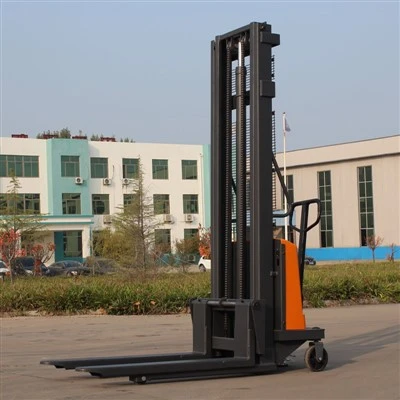
If you’re in the market for a new battery for your electric forklift, or if you’re thinking about replacing your current batteries and want a clear breakdown of costs and options, our team is here to help. We don’t push one type of battery over another—we work with you to assess your daily usage, shift schedule, budget, and long-term goals to find the solution that makes the most sense for your business. We’ve helped everything from small warehouses with 5 forklifts to large manufacturing facilities with 200+ units, and we can give you a no-obligation quote that includes all upfront, operational, and long-term costs. Whether you’re curious about lead-acid, lithium-ion, or leasing options, we’ll take the time to walk you through every detail so you can make a decision that works for your bottom line.
Warehouse Forklift References:
- Material Handling Industry Association. (2022). Total Cost of Ownership for Electric Forklift Batteries.
- Occupational Safety and Health Administration. (2021). Guidelines for Electric Forklift Battery Maintenance and Safety.
- Battery University. (2023). Lithium-Ion vs. Lead-Acid Battery Lifespan and Cost Comparison.
- National Electrical Manufacturers Association. (2022). Charging Infrastructure Requirements for Industrial Electric Vehicles.
- Environmental Protection Agency. (2021). Proper Disposal and Recycling of Industrial Batteries.
Qingdao Dawnshine Heavy Industry Co., Ltd.
As one of the most professional electric forklift manufacturers and suppliers in China, we have world-leading production equipment and strong manufacturing capabilities. Welcome to wholesale discount electric forklift in stock here and get quotation from our factory. For price consultation, contact us.
Address: South Side of Qiwang Road, Yueshan Village, Naoshan Economic Development Zone, Qingzhou City, Shandong Province, China
E-mail: laven.wang@china-dawnshine.com
WebSite: https://www.ds-forklift.com/
