Hey everyone, it’s Jake from your go-to servo hydraulic cylinder supplier, and today I want to talk about something that comes up all the time when customers hit us up for custom or replacement parts: compatibility issues between our servo hydraulic cylinders and the rest of their system. I get it—you don’t just buy a cylinder and plop it in; you have to mesh it with pumps, valves, controllers, hoses, maybe even old mechanical parts you’ve had for years. Nine times out of ten, the frustration isn’t that the cylinder is bad—it’s that they didn’t account for these hidden compatibility headaches that sneak up fast. Let’s break down the real issues I’ve seen (and helped fix) over the last 8 years of doing this, no boring textbook fluff. Servo Hydraulic Cylinder
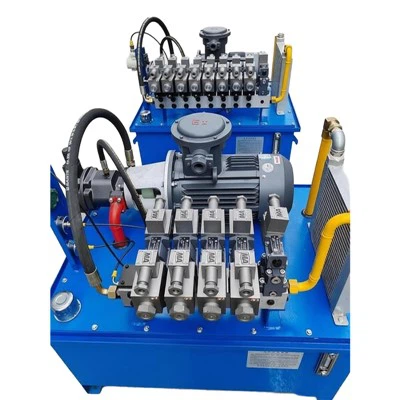
First up: fluid type and condition. This is such a basic one, but it’s the #1 cause of hold-ups. Our cylinders are engineered for specific hydraulic fluids—usually ISO 46 or 68 mineral oil, right? But I’ve had customers come to us with a cylinder that’s already leaking, and they’re using that fancy fire-resistant synthetic fluid from a 10-year-old system. Why does that matter? The seals. Most standard servo cylinder seals (like urethane or nitrile) break down when exposed to the wrong fluid. Synthetic fluids, phosphate esters, even vegetable-based hydraulic oils—they eat through standard seals way faster, which leads to internal leaks, bad servo feedback, and the cylinder not hitting precise positions. I had a guy last month using a biodegradable fluid for an eco-friendly machine; his old seals were gone in 2 weeks, and his servo control was all jittery. He thought the cylinder was faulty, turns out he just needed our fluid-compatible seals swap, not a new whole cylinder. Also, if their fluid is dirty—metal shavings, rust, water contamination—that’s a two-way street. Dirty fluid not only ruins cylinder seals but can clog servo valve ports that work with our cylinders. We always remind customers to flush their lines before installation, but half skip that step, and then blame the cylinder. It’s not our stuff—it’s the gunk they didn’t clean out.
Next: servo controller and encoder communication. This is the techy part that trips up even seasoned engineers. Our servo cylinders use either analog feedback (like a 4-20mA signal) or digital (CANbus, EtherCAT, SSI) to talk to the system’s controller. The problem is matching the signal protocol and resolution. For example, I had a customer with a packaging line that had an old controller from a 2015 machine—they bought one of our high-precision servo cylinders with EtherCAT communication, and it wouldn’t sync. The controller only spoke Modbus RTU, no EtherCAT, so they couldn’t get real-time position data. It took them 3 days of troubleshooting to realize they needed either a signal converter or a controller update. Another issue is resolution mismatch: if the encoder on the cylinder has 10,000 pulses per inch, but the controller is only set to read 5,000, the positioning is off by half an inch. That’s a big deal for things like CNC or assembly lines where tolerances are tight. We don’t set the controller—our job is to make sure the cylinder’s specs match what the controller can handle, but sometimes customers mix and match parts without checking. I always tell them, “Send me your controller model and firmware version before you order a cylinder, so I can confirm compatibility,” but most wait until they’re panicking on installation day.
Third: pressure and flow rate mismatch. This is mechanical, not tech, but it’s just as frustrating. Our servo cylinders have a maximum operating pressure—usually 3000 PSI, but some high-force ones go higher. If the customer’s pump is putting out too much pressure, even with a pressure relief valve, that can blow the cylinder’s seals or damage the piston rod. I had a metal stamping company that had their pump replaced with a higher-output one, and their old cylinder blew a seal mid-shift. They came to us panicking, thinking they needed a higher-PSI cylinder, but actually, they just needed a pressure regulator to match the pump’s output to our cylinder’s rating. Flow rate is another piece: the cylinder’s required flow (gpm) has to match what the servo valve is supplying. If the valve is putting too little flow, the cylinder is slow, can’t reach full stroke, and the servo controller thinks there’s a fault. Too much flow, and it’s jerky, which wears out the cylinder’s rod bearings faster. This isn’t something you can eyeball—you have to do the math on cylinder bore size, stroke speed, and valve flow. Most people don’t, and they end up blaming the cylinder for being “too weak” or “too fast” when it’s just a flow mismatch.
Fourth: mechanical mounting and rod alignment. This is the simplest, most avoidable issue, but it’s everywhere. Our servo cylinders are made for specific mount types—foot mount, flange mount, trunnion mount, etc. If a customer uses the wrong mount, or doesn’t align the rod straight, that causes side loading. Side loading is when the rod isn’t pushing/pulling perfectly straight, so it wears out the seals, scuffs the rod, and makes the servo feedback jittery. I had a customer in the agriculture sector last year—they mounted a horizontal servo cylinder to a hay baler, but they cut a custom mount to save money, and the rod was off by 2 degrees. In 3 months, the rod was scratched, the seals were leaking, and the controller was throwing alignment errors. They thought the cylinder was bad, turns out the mount was garbage. Also, stroke length: if the customer’s system only needs a 12-inch stroke, but they ordered a 18-inch cylinder to “be safe,” the excess stroke can interfere with other parts, or they’ll have to block it, which messes with the servo’s calibration. I always tell them, “Measure twice, order once, and send us your mount drawings before manufacturing—we can adjust it to fit, no extra charge.” But again, most skip that, and end up with a cylinder that doesn’t fit their existing setup.
Fifth: thermal expansion and compatibility with adjacent parts. This one is sneaky because it’s not obvious at first. Hydraulic systems run hot, especially when the cylinder is working hard—temperatures can hit 140°F to 180°F. Our cylinders are engineered to handle that, but if other parts in the system (like hoses, valves, or the machine frame) expand at a different rate, that causes issues. For example, if a customer uses rubber hoses that get too soft at high temperatures, they can bulge, causing pressure spikes that damage the cylinder’s seals. Or if the machine frame is steel, and the cylinder’s mount is aluminum, the aluminum expands more than the steel, so by the end of a long shift, the mount shifts, and the rod alignment is off. I had a food processing customer a while back—their system runs hot all day, and their hoses were old, so they kept popping. We recommended high-temperature silicone-reinforced hoses, and the problem went away. Also, if the cylinder is exposed to extreme cold (like outdoor equipment in winter), seals can harden, leading to leaks. That’s why we offer cold-compatible seals for free if customers let us know their operating environment upfront.
Wait, let’s be real—there are ways to avoid 90% of these issues, right? As a supplier, we don’t just ship a cylinder and ghost you. We have a pre-installation check list that we send every customer, but most don’t read it until it’s too late. For example, ask us for a fluid compatibility sheet before you order—we’ll tell you exactly what seals you need for non-standard fluids. Send us your controller specs, your valve flow, your mount drawings, and your operating temp range. We’ll customize the cylinder to fit your system, not the other way around. I get it, you’re in a hurry to get the machine running, but cutting corners here means downtime, which is way more expensive than taking an extra week to confirm details.
Last month, we had a customer who ordered a standard servo cylinder for a linear motion table, and was having alignment issues. He sent us his CAD files for the table, and we noticed that his mounting holes were off by 0.5 inches. Instead of making him send it back, we modified the cylinder’s flange mount for free, and the problem was fixed in 2 days. That’s the kind of thing we do—we’re not a big box supplier that just ships parts and walks away. We’re local (well, our team is, anyway) and we troubleshoot with you step by step.
So if you’re dealing with compatibility issues right now—whether it’s a new cylinder that’s not working, or an old one that’s giving you grief—don’t guess. Reach out, tell me what you’re working with: what fluid you use, what controller, your valve specs, your mount type, what machine it’s going on. We’ll walk you through it, no pressure, no sales pitch that’s too pushy. We just want your cylinder to work like it’s supposed to, because that’s how we build long-term customers, not one-off sales.
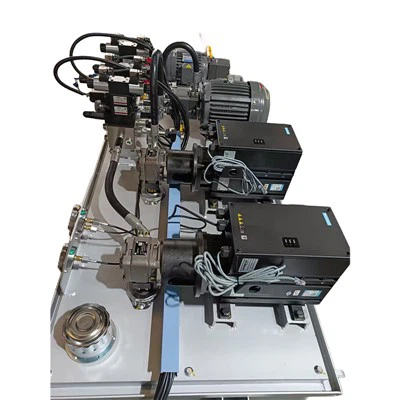
Look, servo hydraulic cylinders are amazing for precision, high-force applications, but they only work if you mesh them with the rest of your system correctly. The compatibility issues aren’t about the cylinder being “incompatible” by design—they’re about not asking the right questions upfront. Next time you order a cylinder, hit us up before you check out. Tell us your setup, and we’ll make sure you get the right part, no surprises. We’re here to help you avoid the headache, not add to it. Thanks for reading, and if you’ve had a compatibility issue we didn’t cover, drop a note below—I’d love to chat about it.
Industrial Hydraulic Systems References:
- Hydraulic Component Compatibility Guidelines, National Fluid Power Association, 2021.
- Servo Hydraulic System Integration Best Practices, Society of Manufacturing Engineers, 2022.
- Seal Material Compatibility for Hydraulic Fluids, Parker Hannifin Corp., 2020.
- Electrical Signal Protocols for Industrial Actuators, International Society of Automation, 2021.
- Mechanical Mounting and Alignment for Hydraulic Cylinders, Eaton Hydraulics, 2022.
Wuhu Zhongye Fluid Equipment Co., Ltd.
We are one of the most experienced servo hydraulic cylinder manufacturers and suppliers in China, specialized in providing high quality customized products. Please feel free to wholesale bulk durable servo hydraulic cylinder in stock here from our factory. Contact us for quotation.
Address: No. 2, Hexing Road, Sanshan District, Wuhu City, Anhui Province
E-mail: zhongyehydro20@163.com
WebSite: https://www.zhongyehydro.com/
