If you’re an industrial engineer, plant manager, or maintenance technician, you’ve probably stared at a wall full of gauges, spreadsheets full of energy usage data, and a checklist of tools you need to troubleshoot a manufacturing line, and wondered if there’s a way to cut down on both the mess and the downtime. For years, my company has supplied multi function meters (MFMs) to industrial facilities, and one question comes up again and again: Can these devices actually stand up to the harsh, high-stakes environment of industrial use? The short answer is yes—but only if you understand what an MFM is, how it differs from the basic power meters you might have used in an office, and why it’s not a luxury add-on, but a critical piece of infrastructure for modern industrial operations. Multi Function Meter

Let’s start with what an MFM actually does. Unlike a standard single-function power meter, which only measures voltage or current, a multi function meter pulls double duty (or triple, quadruple, etc.) by measuring a whole suite of electrical parameters in one device. For industrial settings, that means it can track not just basic voltage and current, but also power factor, real power, reactive power, apparent power, frequency, and even harmonic distortion—something that’s non-negotiable when you’re dealing with heavy machinery, variable speed drives, and production lines that run 24/7.
But why does that matter for industrial jobs? Let’s break it down with a real-world example from a recent client of mine: a mid-sized food processing plant in the Midwest. They had a recurring problem: their packaging line would randomly shut down without warning, costing them $12,000 in lost production every unplanned hour. For months, maintenance teams checked wiring, motors, and circuit breakers, but they couldn’t find a consistent issue. When they installed an MFM we supplied, they discovered the root cause: the line’s variable speed drive was generating 3rd and 5th harmonics that spiked every time the line switched from slow to fast speed. Those harmonic spikes were throwing off the plant’s main power supply, tripping the circuit breaker without any obvious signs of damage. Once they adjusted their harmonic filters based on the MFM’s data, unplanned shutdowns dropped by 90%. That’s not a minor upgrade—that’s a direct impact on the bottom line.
Now, let’s talk about the industrial environment, because that’s where a lot of people assume MFMs might fall short. Industrial facilities aren’t office buildings; they’re dusty, humid, subject to extreme temperature swings, and often exposed to vibration from heavy machinery. A standard consumer-grade meter would burn out in weeks, but industrial MFMs are built for exactly that. The ones we supply are rated for NEMA 4X enclosures, which means they’re dust-tight and can handle high-pressure water spray—perfect for a chemical plant that hoses down equipment daily, or a food plant with high humidity and occasional water splashes. They also operate in temperatures from -40°F to 140°F, which covers everything from cold storage warehouses in the winter to steel mills where temperatures regularly top 100°F on the floor. Vibration resistance is another key feature; industrial MFMs have shock ratings up to 15g, so they don’t misread data when mounted near a stamping press or a conveyor that shakes the entire wall.
Another big win for industrial use is the data logging and connectivity. Most industrial facilities still rely on manual meter readings, which are time-consuming and prone to human error. An MFM can log power data every 15 minutes, 1 minute, or even every second—whatever interval you need—and store it for months. Better yet, modern MFMs connect to your plant’s SCADA system (Supervisory Control and Data Acquisition) or energy management software, so you can monitor real-time performance from a control room, or even from a phone when you’re on the move. For a plant manager, that means you don’t have to walk 10 minutes to the electrical room every hour to check a gauge; you can get alerts if power factor drops, or if a harmonic spike is approaching a threshold that could damage equipment. That kind of visibility is game-changing for predictive maintenance—instead of replacing a motor because it’s failed, you can spot a power issue weeks in advance and schedule a repair during a planned shutdown, avoiding costly unplanned downtime.
Wait, but what about cost? A lot of industrial operators look at an MFM and think, “I can buy a dozen basic meters for the price of one, so why spend more?” That’s a fair question, but the math doesn’t add up when you factor in what you’re saving. Let’s go back to the food processing plant example: the MFM cost around $800, and the labor to install it was about $300. The unplanned shutdowns they eliminated were costing $12,000 an hour, and they had an average of two unplanned shutdowns a month. That’s $288,000 a month in lost revenue, and even if the MFM only cut that by half, it would pay for itself in a single day. Plus, MFMs reduce the need for separate tools: you don’t need a voltmeter, a power quality analyzer, and a harmonic tester, because the MFM does all of that in one device. That cuts down on tool inventory, training time for technicians, and the risk of human error when measuring multiple parameters.
But let’s be clear: not all MFMs are created equal. The ones that work best in industrial applications are the ones designed specifically for that use case, not the ones repurposed from commercial office buildings. A commercial MFM might measure the same parameters, but it won’t have the durability, connectivity, or accuracy required for industrial jobs. For example, industrial MFMs have accuracy ratings of 0.5% or better, which is critical if you’re trying to track energy usage for billing, or detect small power issues that could turn into big problems. A commercial MFM might only be accurate to 1% or 2%, which is fine for tracking office lighting, but not for a 1000HP motor that costs $50,000 to replace.
Another common use case for industrial MFMs is energy management. With energy costs rising 2-5% annually for most industrial facilities, reducing energy waste is a top priority. MFMs can track which pieces of equipment are using the most power, so you can identify inefficiencies. For example, a printing plant we work with noticed that their old press was using 15% more energy than a new press of the same size, based on MFM data. They retrofitted the old press with a more efficient motor, cutting their monthly energy bill by $4,500. That’s money that can go back into expanding production, hiring more staff, or upgrading other equipment—all things that help a business grow.
Power quality is another area where industrial MFMs shine. Industrial equipment is sensitive to even small power abnormalities: voltage sags, swells, harmonic distortion, and power outages can damage motors, blow out circuit boards, and cause production to stop. MFMs can measure these anomalies and log them with timestamps, so you can correlate a power issue with a specific event on the production line. For example, a automotive assembly plant had a problem with their robotic welders malfunctioning at random. The MFM showed that every time a welder ran, it caused a voltage sag that lasted 0.2 seconds—enough to make the robots reset, but not enough to trigger the plant’s main power alarm. Once they adjusted their transformer capacity based on that data, the welders ran without any more issues.
Of course, there are limitations to what an MFM can do. It’s a measurement tool, not a repair tool, so it won’t fix a broken motor or a faulty wiring connection. But it will give you the data you need to find the problem faster, which is half the battle. Also, you need to install it correctly: MFMs require proper wiring, calibration, and integration with your existing electrical system to work at their best. That’s why working with a supplier who has experience in industrial applications is important—we don’t just sell a device, we help with installation, calibration, and training so your team knows how to use the data it provides.
I’ve heard some technicians say, “I’ve been working in industrial for 20 years, I don’t need a fancy meter to tell me what’s wrong.” That’s true—until the day you run into a problem you’ve never seen before. I’ve seen countless cases where a veteran technician was stumped for days, until an MFM uncovered a harmonic issue, a power factor problem, or a subtle voltage sag that was impossible to detect with a basic meter. Those cases are exactly why MFMs have become standard in industrial facilities from small factories to large manufacturing parks.
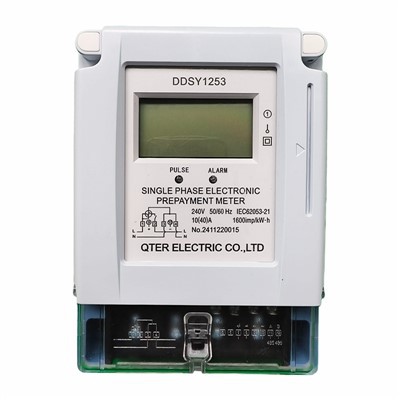
At the end of the day, industrial operations are all about uptime, efficiency, and safety. An MFM checks all three boxes: it reduces unplanned downtime by detecting issues early, cuts energy waste to improve efficiency, and helps prevent electrical hazards by tracking power quality and overloads. If you’re still relying on basic meters or manual readings, an MFM is not just an upgrade—it’s an investment that will pay for itself in less time than you think.
Multi Function Meter If you’re ready to learn more about how an MFM can work for your industrial application, or to discuss your specific needs, reach out to our team to connect with a procurement and technical specialist.
[References]
- International Electrotechnical Commission (IEC) 61557-12, Electrical safety in low voltage distribution systems up to 1000 V a.c. and 1500 V d.c. – Equipment for testing, measuring or monitoring of protective measures – Part 12: Multiparameter measurement devices
- National Electrical Manufacturers Association (NEMA) Standard for Industrial Control and Systems, NEMA ICS 2-2017, Environmental Testing for Industrial Control Equipment
- U.S. Department of Energy, Industrial Energy Efficiency Guide: Power Quality and Energy Management in Manufacturing Facilities, 2021
- International Society of Automation (ISA), ISA-95.00.02, Enterprise-Control System Integration — Part 2: Object Model Attributes for Manufacturing Operations Management, 2018
Zhejiang Qunte New Energy Technology Co., Ltd.
As one of the most professional multi function meter manufacturers in China, we’re featured by quality products and good price. Please rest assured to buy discount multi function meter made in China here from our factory. We also accept customized orders.
Address: No. 56, Fengxi Road, Tang’ao Yu Village, Liushi Town, Yueqing City, Wenzhou City, Zhejiang Province
E-mail: 251951196@qq.com
WebSite: https://www.zjqtmeter.com/
