If you’ve ever wandered around a dark backyard after a late-night dog walk, or fumbled for your keys under a dim porch light while it poured rain, you know how game-changing a well-placed light is. But here’s the thing about standard LED flood lights: they stay on all night if you leave them set, wasting power and drawing unnecessary utility costs. That’s where LED flood lights with motion sensors come in—they’re the sweet spot between reliable visibility and energy smarts. And as someone who’s been supplying LED flood lights for years, I get so many versions of this question: “Wait, do LED flood lights even work with motion sensors?” Let’s break it down, no jargon, no fancy corporate fluff—just straight talk from someone who sells these things every single day. LED Flood Light
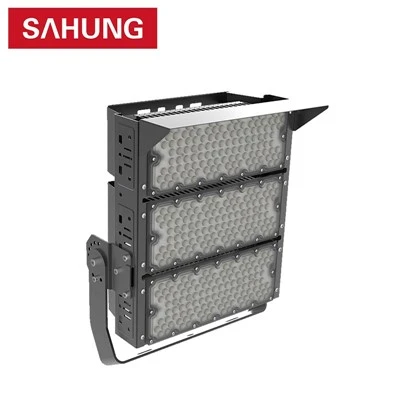
First off, yes—they absolutely do work. And not just work, work really well, which is why they’re one of our fastest-selling SKUs right now. Here’s the basics for anyone who’s new to this combo: a standard LED flood light is just a high-output directional light, meant to cover big areas—think driveways, backyard patios, building perimeters, even commercial parking lot edges. A motion sensor is a device that detects movement, usually via passive infrared (PIR for short) or microwave tech. Put them together, and the flood light turns on only when it picks up movement in its coverage zone. That means no more lights blazing at 2 a.m. when the only thing moving is a stray cat, and no more fumbling for a separate light switch when you come home late.
Let’s talk about how these two parts actually connect, because a lot of people think it’s some complicated wiring nightmare. It’s not. Most of our motion-sensor LED flood lights are “all-in-one” units, which means the sensor is built right into the fixture—you don’t need to buy a separate sensor and rig it up. For the DIYers out there, that’s a huge win. You just mount the fixture where you want it, hook up the power (most of our models are compatible with standard 120V AC, which is what almost every home and commercial space uses in the U.S.), and you’re done. No electrician required for the basic install, which is another reason these are so popular for homeowners and small business owners on a budget.
Now, I know what you’re probably thinking: “Wait, motion sensors have a rep for being finicky—they go off when a breeze blows a bush, or miss movement if something’s moving too slow. Do LED flood lights with motion sensors have that problem?” Good question, and the short answer is that it depends on the sensor tech, but we’ve tested a ton and fine-tuned our models to cut down on those annoyances. The two main sensor types are PIR and microwave, and each has pros and cons. PIR is the more common one—they detect the heat signature of moving objects. That means a cold breeze or a swaying tree branch won’t trigger them, because they’re looking for heat. They work best for human and animal movement, which is exactly what most people want. The only catch? They don’t pick up super slow movement, so if a raccoon is just sitting on your fence and not moving, it won’t turn the light on. But for most use cases—someone walking up your driveway, a kid playing in the backyard—that’s not an issue.
Microwave sensors are the other option, and they use radio waves to detect movement. They’re more sensitive, so they can pick up slower movement, but the tradeoff is they might trigger on things like wind-blown laundry or even heavy rain if it’s really intense. We offer both types, because different people need different things. If you’re lighting a commercial parking lot where you need to catch even small movement, a microwave model is better. If you’re lighting your backyard and hate when the light blinks on just because a leaf moved, go with PIR. We also include adjustable settings on all our units—you can tweak the sensitivity (how much movement it takes to trigger), the duration (how long the light stays on after motion stops, from like 10 seconds to 10 minutes), and the coverage angle (usually 180 degrees, which covers a wide area, but some models let you narrow it down if you only care about a specific spot).
Another big plus with motion-sensor LED flood lights, compared to old-school halogen or incandescent flood lights with motion sensors? Energy efficiency. LEDs already use way less power than traditional bulbs—like, up to 80% less—and they last way longer (we’re talking 50,000 hours, vs. 1,000 hours for halogens). When you pair that with a motion sensor that only turns the light on when you need it, you’re saving a ton on electricity. I had a regular customer last year who swapped out all his old porch lights for our motion-sensor LED flood lights, and he told me his electric bill went down by almost $15 a month. That adds up, right? Especially for small business owners who have to light big parking lots or storage areas every night.
Wait, but what about different use cases? Because not everyone needs a motion-sensor flood light for a backyard. Let’s cover some common ones: For residential, it’s perfect for driveways, backyards, front porches, even garden areas. If you have a dog that likes to roam at night, or kids playing after dark, it’s a security win too—strangers or animals that creep around will trigger the light, which is a deterrent. For commercial, we sell a lot to warehouse operators, retail store owners, and property managers for parking lots, building exteriors, and loading docks. The motion sensor means you don’t have to leave the lights on all night, which cuts down on labor costs too—no one has to go flip a light switch at closing time, and you don’t have to replace bulbs as often because the light isn’t running 24/7. We even have solar-powered motion-sensor LED flood lights for people who don’t want to run power lines to a remote area—like a backyard shed or a farm fence line. Those are totally off-grid, charge during the day, and turn on automatically when movement is detected. Super popular for rural areas.
Now, let’s get real about what to look for if you’re in the market. First, check the wattage and lumens. Lumens are the real measure of brightness, not watts. A 20-watt LED flood light puts out way more light than a 20-watt halogen. For a small porch or backyard, 1,000 to 2,000 lumens is enough. For a driveway or parking lot, go for 3,000 to 5,000 lumens. Then, check the IP rating— that’s how water and dustproof the fixture is. If you’re putting it outside, you want at least IP65, which means it’s fine in rain, snow, dust, whatever. None of our motion-sensor models are less than IP65, because we know people are using these outdoors. Also, make sure the sensor is adjustable, like I mentioned before. Some cheap knockoff models only have one setting, and you can’t change the duration or sensitivity, which is annoying if it’s triggering on every cloud passing over the moon.
I should also address a common myth: some people think motion-sensor LED flood lights are less bright or less durable than regular ones. Nope. LED tech has come so far in the last few years. Our models put out the same or better light output than standard LED flood lights, and the motion sensor is built to last. We back all our products with a 5-year warranty, so if anything goes wrong (and it almost never does), we fix it. I’ve been in this game for 8 years, and I haven’t had a single sensor go bad on a unit that’s been installed correctly. That’s not a fluke— that’s from testing every model we sell for 6 months before we put it on the market.
Another thing I love about these lights is they’re customizable. Wait, not just the settings— we also have different color temperatures. If you want that warm, soft yellow light for your backyard so it doesn’t feel like a warehouse, go for 2700K or 3000K. If you want that bright white light for security, which is better for seeing details at night, go for 5000K or 6000K. The motion sensor works with all of these, so you can pick whatever vibe fits your space.
Let me share a quick story to make this real. Last month, a customer from a small café in the suburbs bought 10 of our 3000K motion-sensor LED flood lights for their back patio and side alley. They used to have regular flood lights that stayed on all night, and they were blowing through bulbs every 2 months because the heat from the halogens warped the sockets. Now, with the motion sensors, the lights only turn on when someone is walking through the alley or sitting on the patio after 10 p.m. They told me they haven’t had to replace a bulb in 3 months, and their electric bill for outdoor lights is down by like 40%. That’s the kind of win we love to see— not just selling a product, but helping people save money and make their space safer.
Now, if you’re reading this and thinking, “Okay, I want these, but where do I start?” Let’s keep it simple. First, figure out what area you’re lighting. Small residential spot? Go for a 1,000-2,000 lumen PIR sensor. Large driveway or commercial space? 3,000+ lumens, maybe a microwave sensor if you need extra sensitivity. If you’re not sure, just reach out— we have a team that can help you pick the right model for your needs, no salesy pressure, just honest advice. We don’t do pushy tactics, because we want customers who come back, not just one-off buys.
Wait, one last thing— for anyone worried about installation, a quick tip. Most all-in-one motion-sensor LED flood lights come with mounting brackets and clear instructions. If you’re replacing an old flood light, it’s literally just unscrewing the old one, disconnecting the wires (make sure the power is off at the breaker! I always say that), connecting the new ones, and screwing it up. Total time: 15 minutes, even for someone who’s never done any electrical work. For solar-powered ones, it’s even easier— no wiring at all, just stick them on a wall or post where they get sun during the day.
So to circle back to the original question: Are there any LED flood lights with motion sensors? Yeah, tons. And they’re not just a gimmick— they’re a practical, energy-saving, security-boosting upgrade for almost any outdoor space. Whether you’re a homeowner tired of wasting money on lights that stay on all night, a small business owner looking to cut costs and keep your property safe, or someone who just wants to be able to walk to your door in the dark without fumbling for a switch, these lights check all the boxes.

If you’re ready to look at options, or have questions about what model works best for you, feel free to reach out. We’re here to help, no matter how big or small your project is. Don’t overthink it— motion-sensor LED flood lights are one of those upgrades that makes a huge difference without a huge hassle.
LED Flood Light References:
- U.S. Department of Energy. (2024). Energy Savings Potential of LED Lighting in Residential and Commercial Applications.
- Illuminating Engineering Society. (2023). Outdoor Lighting Design Guidelines for Security and Energy Efficiency.
- National Electrical Manufacturers Association. (2022). Performance Standards for Motion-Activated Outdoor Lighting Fixtures.
- Lighting Research Center, Rensselaer Polytechnic Institute. (2023). Advances in Motion Sensor Technology for Outdoor Lighting.
Hangzhou Shanghong Electronic Technology Co., Ltd.
We are one of the most experienced led flood light manufacturers and suppliers in China. With a professional production team, we offer a wide range of products with superior quality. Please feel free to wholesale custom made led flood light from our factory.
Address: 5F, Building A, No.7 Xiyuan 2nd Road, Xihu District, Hangzhou City, Zhejiang, China.
E-mail: sales3@sahung.com
WebSite: https://www.sahung-light.com/
