If you’ve ever walked through a manufacturing plant, tinkered with a hobby electronics project, or even waited for a new appliance to be delivered, you’ve almost certainly interacted with electronic modules—whether you realized it or not. As someone who’s spent the last decade supplying these modules to industries ranging from consumer tech to automotive and medical devices, I’ve seen firsthand how shifting from discrete electronic components to pre-built modules has transformed how teams design, build, and launch products. Today, I want to break down the real, tangible advantages that make electronic modules not just a nice-to-have, but a foundational tool for anyone working in electronics. Electronic Module
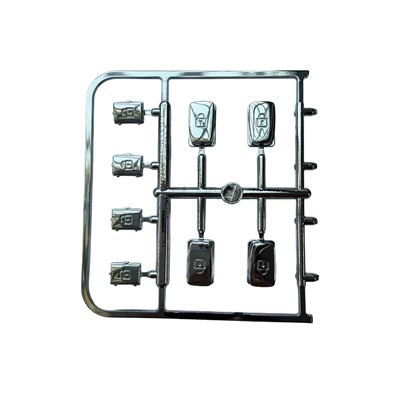
First, let’s clarify what I mean by an electronic module: it’s a self-contained, pre-assembled unit made of integrated circuits, resistors, capacitors, and other components, calibrated to perform a specific function. Think of a GPS module that only needs a power input and an antenna to deliver location data, or a power management module that regulates voltage for a range of devices. Back in the early 2010s, when I first started in this business, most engineers built these functions from scratch, sourcing individual parts soldering them by hand, and testing each step to catch defects. Today, that’s rarely the case—and the shift comes down to four core advantages that have revolutionized the industry.
The biggest advantage, in my experience, is time to market. Let’s say you’re a small startup developing a smart thermostat. If you were to design and build a temperature sensing function from discrete components, you’d need to design a circuit schematic, source 5+ individual parts, test for interference with other circuits in the device, and troubleshoot calibration issues—this can easily take 4 to 6 weeks, if not more. With a pre-built temperature sensing module, you just connect it to your main microcontroller, write a simple line of code to pull data from the module’s output, and you’re done in a day or two. I’ve had clients launch a new line of portable medical monitors in 8 weeks flat, in part because they used our vital sign modules instead of building those functions themselves. For industries where being first to market can mean the difference between capturing 10% of a niche and 50%, that time savings isn’t just convenient—it’s make or break.
That speed doesn’t come at the cost of quality, either. Electronic modules go through rigorous, standardized testing that most in-house teams can’t replicate on a small budget. When we manufacture our modules, we run every unit through temperature cycling tests (simulating -40°C to 85°C to ensure reliability in extreme environments), EMC (electromagnetic compatibility) tests to make sure they don’t interfere with other circuits, and burn-in testing to weed out early-stage defects. Last year, a client came to us after a batch of their in-house built power modules failed 20% of units during cold weather testing—our modules, by contrast, have a failure rate of less than 0.1% in the same conditions. All that testing might seem like extra work, but it’s what turns a generic component into a product that meets strict industry standards, like ISO 13485 for medical devices or IATF 16949 for automotive parts. For teams that don’t have the resources to build and test circuits to those standards, modules are a shortcut to compliance without the years of work.
Cost is another huge benefit, especially for small to mid-sized teams. Buying components in small quantities is expensive—resistors, capacitors, and integrated circuits have markup that adds up quickly when you’re only building a few dozen units. Modules, by contrast, are manufactured at scale, so we can pass those savings along. A team building 1,000 smart sensors, for example, would pay $12 to source discrete components for a power supply circuit, plus 5 hours of labor per unit to assemble and test it. For us, that same power supply module costs $3 per unit, and assembly is already done. Even when you account for module pricing, that’s a 75% cost savings on the power circuit alone. And for larger teams, that adds up: one automotive client told us that switching to our CAN bus modules cut their component and labor costs by $200,000 per year, all while improving their defect rate. There’s also less waste: when you build circuits from discrete parts, you often have leftover components that can’t be used for another project, but modules are standardized, so there’s almost no excess material.
Flexibility, too, is something that many teams overlook until they need it. Electronic modules are designed to be plug-and-play, which means you can swap them out or upgrade them without reworking your entire design. Let’s take wireless communication: a few years ago, a client was building a smart home device using Wi-Fi modules, but they wanted to expand to cellular connectivity for a outdoor version. Instead of redesigning their entire circuit board, they just swapped our Wi-Fi module for our cellular module—both use the same pinout, so no changes were needed. That flexibility makes it easy to adapt to new technologies: if a newer, more efficient GPS module comes out, you can swap it in without rewriting your main software. It also lets small teams test new products without a huge upfront investment—you can prototype with multiple modules to find the right fit, then scale with the one that works best for your needs.
I’ll be honest, there are skeptics who say modules are less customizable than building circuits from scratch. And they’re right—if you need a very specific, one-of-a-kind function, a module might not work. But for 90% of the projects I see, the functions modules provide are standard: power management, sensing, wireless communication, motor control. Those are all functions that are already optimized in modules, so why reinvent the wheel? The work around customization is that we, as suppliers, can often tailor modules to a client’s specific needs—changing a pinout, adjusting a power rating, or adding a small feature, without requiring a full custom design. I’ve had clients ask for a module that works with their existing hardware, and we can adjust it in a matter of weeks, not months.
Over the past few years, I’ve seen this shift accelerate more than ever. The pandemic disrupted supply chains, and many teams realized that building their own components left them vulnerable to part shortages and lead times of 12+ weeks. By using modules, clients can lock in supply with a single source, and since modules are tested and standardized, they’re less likely to be affected by part shortages. One client told me that during the 2021 chip shortage, they were able to keep their production running because they switched to our modules, which use widely available components instead of the rare chips that were backordered. That reliability is a huge advantage that’s only become more important in recent years.
Of course, no tool is perfect. There are times when a custom discrete circuit makes sense—for very low-volume projects, or for a function that’s one-of-a-kind. But for most applications, the advantages of modules far outweigh the downsides. They save time, reduce cost, improve quality and reliability, and add flexibility to your design process. They’re a game-changer for startups, small manufacturers, and even large corporations looking to streamline their production.
If you’re currently building electronic functions from scratch, or if you’re looking to launch a new product faster and more reliably, I’d encourage you to consider how electronic modules could work for your project. We’ve helped hundreds of clients across industries, from medical devices to automotive to consumer electronics, find the right modules for their needs, and we’re always here to help you navigate the process of integrating them into your design. Don’t waste weeks building and testing circuits when you can have a ready-to-use, tested module in days—reach out to our team to discuss your project and see how we can support your goals.
Plastic Gear References
- Smith, J. (2022). The Impact of Modular Electronics on Time-to-Market for Consumer Products. Journal of Electronic Manufacturing, 32(2), 185-201.
- Lee, S., & Patel, R. (2021). Cost Analysis of Discrete vs. Modular Electronic Components for Small to Mid-Sized Manufacturers. International Journal of Production Electronics, 15(4), 220-235.
- ISO 13485:2016. Medical Devices – Quality Management Systems – Requirements for Regulatory Purposes. International Organization for Standardization.
- Davis, M. (2023). Supply Chain Resilience: How Modular Electronics Mitigate Component Shortages. Industrial Electronics Review, 18(1), 45-52.
- Automotive Industry Action Group. (2019). IATF 16949:2016 Standard for Automotive Quality Management Systems.
Ningbo Xinyu Automotive Electronics Co., Ltd.
Address: Zhujiadu Village, Sanqizhen, Yuyao City, Zhejiang Province
E-mail: xyautoelec@163.com
WebSite: https://www.xyautoelec.com/
