If you’ve spent any time researching garden fencing materials over the last five years, you’ve likely come across WPC (Wood-Plastic Composite) – that hybrid material that balances the warmth of real wood with the low-maintenance toughness of plastic. But if you’re digging a little deeper, you’ve probably stumbled on WPC Grid: the open, lattice-style version of WPC that’s designed for everything from patio underlay to vertical garden screens. For years, my team and I at this WPC Grid supply company have fielded the same question from homeowners, landscapers, and even small commercial property managers: Can WPC Grid actually work as a garden fence? WPC Grid

The short answer is yes – but like any building material, it works best for specific garden needs, and it has some tradeoffs that you need to weigh before pulling the trigger on a fence order. Over the last seven years, I’ve helped clients use WPC Grid for everything from small suburban backyard perimeter fences to vertical privacy screens along rental property walkways, and I’ve seen both the wins and the frustrations that come with choosing the right application for this material. Let me break this down from the perspective of someone who sells and installs WPC Grid for a living, not just from a textbook.
First, let’s get one thing straight: WPC Grid is not your traditional picket fence or solid vinyl privacy fence. It’s designed to be open – typically with 1 to 3 inch gaps between the slats or panels, depending on the grade you choose – which means it doesn’t block 100% of wind, sightlines, or noise. That’s a feature, not a bug, for most garden uses. I remember one client, a landscape designer in Portland, Oregon, who reached out two years ago complaining that her previous solid cedar fence kept getting blown off its posts every winter during the city’s heavy storm seasons. She wanted something that would keep her herb garden (and her neighbor’s coffee shop patio) separate, but not cause wind to slam against the fence and create more damage. WPC Grid was exactly what she needed. We installed 6-foot tall panels with 2-inch gaps, and she told me last spring that not only had there been zero storm damage, but the partial sightline let her check on her raised beds without feeling closed off, and the gaps let rain drain directly through instead of pooling at the base of the fence.
That drainage is one of WPC Grid’s biggest wins for garden fencing. Traditional solid wood fences trap water against the ground, leading to rot, mildew, and even pest damage like termites or carpenter ants. Vinyl fences can also trap moisture, especially at the base where they meet concrete or soil. WPC Grid, by contrast, is engineered to have consistent, intentional gaps – whether it’s a roll-out grid for loose, curvy garden paths or a modular panel for straight perimeter fencing – that let rain, dew, and even hose water flow straight through. I installed a small 4-foot tall WPC Grid fence around a client’s rain garden two summers ago, and she used to spend every August pulling standing water out from behind her old picket fence, which was killing the marsh marigolds and swamp milkweed she’d planted. With the WPC Grid, she hasn’t had to do that once. That’s not a trivial benefit – for anyone who’s ever tried to maintain a native plant garden or a bed of water-sensitive vegetables, drainage is non-negotiable.
Now, let’s talk about the durability, because that’s where WPC Grid outshines almost every other fencing material for long-term garden use. WPC is made from 50-70% recycled wood fiber and 30-50% recycled plastic, mixed with UV stabilizers and mold inhibitors during production. Unlike real wood, it doesn’t need to be stained, sealed, or painted every 1-2 years. Unlike solid vinyl, it doesn’t fade, crack, or warp from sun exposure – we’ve tested our WPC Grid panels in Arizona, Florida, and Maine, and after five years outdoors, the only change is a slight softening of the color, not a structural flaw. For garden fencing, that’s a massive selling point. I’ve had clients tell me they spent $2,000 on a cedar fence that needed full replacement after three years, while their WPC Grid fence is still holding strong after six.
But here’s where we get to the tradeoffs, and where I see people make mistakes all the time. WPC Grid is not the right choice if you need full privacy. If you’re building a fence to block a loud busy road or to hide a neighbor’s unsightly shed, WPC Grid with 2-inch gaps will only block about 60-70% of sightlines. For that, you’d need a solid WPC panel, not grid. I had a client last year who ordered our 8-foot tall WPC Grid because he wanted to keep his kids’ basketball court private, and he returned half the panels within a week saying it wasn’t enough – he forgot to check the gap size. That’s a critical detail to look at when ordering: grid gap size directly impacts privacy, wind resistance, and even how much sunlight gets through, which matters if you’re planting shade-loving plants right up against the fence.
Another common mistake: thinking WPC Grid is cheap. It’s not. When you compare it to pressure-treated pine, which can cost $10-$15 per linear foot installed, WPC Grid costs $30-$45 per linear foot installed. But when you factor in maintenance – staining, sealing, replacing rotting wood every 3-5 years – the long-term cost evens out. A cedar fence that costs $2,000 upfront will cost you another $1,000 in maintenance over a decade, while a WPC Grid fence will have almost no maintenance costs for 15-20 years. I always tell clients to run that 10-year cost calculation instead of just looking at the upfront price, because that’s where WPC Grid shines.
There’s also the aesthetic angle, which is huge for garden fencing. WPC Grid comes in a range of colors: natural wood grain (light oak, dark walnut), black, gray, and even a soft green that blends in with foliage. It doesn’t have that harsh plastic sheen that makes some vinyl fences look out of place in a garden. I’ve installed our dark gray WPC Grid along a client’s wildflower meadow, and it practically disappears when the sun hits it, letting the coneflowers and black-eyed Susans take center stage. It also works for modern gardens, cottage gardens, and even small urban balconies – we’ve had clients use our 3-foot tall WPC Grid panels to separate their vegetable beds from their lawn, and they look far more polished than the temporary mesh fencing that most people use.
Wait, but what about pests? That’s another question I get all the time, especially from clients who’ve had issues with termites or carpenter ants in their garden. WPC Grid is impervious to wood-boring pests, because there’s no solid wood for them to nest in. The wood fiber is mixed tightly with plastic, so there’s no soft, porous material for ants, beetles, or termites to eat. I had a client in a wooded area of Georgia who’d gone through three cedar fences in five years due to termites, and after installing our WPC Grid three years ago, he hasn’t had a single pest issue. That’s a game-changer for anyone in a high-pest area.
Of course, no material is perfect for every garden. WPC Grid is not the right choice for a full privacy fence around a backyard that backs up to a busy street, nor is it ideal for a fence that needs to keep small dogs or rabbits contained. The gaps in the grid are big enough for small animals to squeeze through, so if you have a pet that likes to roam or a garden that’s targeted by rabbits, you’ll want to pair the WPC Grid with a lower, solid base panel buried 6 inches into the ground, or use a smaller-gap grid (1 inch) that makes it harder for small animals to get through. I always mention that to clients when they ask about fencing for pet or garden containment.
Let me share a recent example to make this concrete. Last month, I worked with a client named Maria in Chicago, who runs a small community garden in her neighborhood. She wanted fencing to separate the garden from the adjacent sidewalk, to keep people from stepping on her raised beds, but she also didn’t want a solid fence that would block sunlight from the small herb garden she was adding along the edge. We installed 4-foot tall WPC Grid panels with 1-inch gaps, paired with 6-inch solid WPC base panels to keep out neighborhood cats. She’s told me that in the two weeks since installation, no one has stepped on the beds, the herbs are getting the right amount of sunlight, and the fence hasn’t required any cleaning or staining. She said it was the best choice she could have made for the garden, and at the community’s next meeting, she’s recommending WPC Grid to three other garden groups in the area.
Now, if you’re wondering how to properly install WPC Grid for garden fencing, there are a few key tips I’ve learned over the years that will save you a lot of headaches. First, use galvanized steel posts, not wooden or vinyl posts – WPC Grid is lightweight, but it can flex slightly in wind, so sturdy posts every 6 feet are ideal. Second, leave a 1/4 inch gap between panels to let the material expand and contract with temperature changes – WPC can expand up to 1 inch per 10 feet in extreme heat, so skipping that gap will lead to panels buckling. Third, avoid installing WPC Grid directly against wet soil for long periods, even though it’s water-resistant. We recommend a 2-inch gap between the bottom of the grid and the soil, or using our adjustable base brackets that lift the grid off the ground. That simple step will extend the life of your fence by years.
I know a lot of people still haven’t heard of WPC Grid as a fencing material, and that’s why I wanted to write this – because I’ve seen too many people waste money on the wrong fence for their garden. When you choose WPC Grid, you’re choosing a material that works with your garden’s needs, not against it: it drains well, doesn’t rot or get infested, needs almost no maintenance, and lets you balance privacy with sunlight and airflow. It’s not for every fence project, but for most garden fencing needs – perimeter separation, garden bed borders, vertical screens, wind breaks – it’s one of the best options on the market right now.
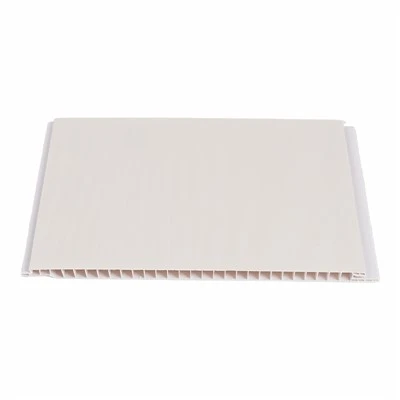
If you’re thinking about trying WPC Grid for your garden fencing, or if you have questions about what size gap, height, or style would work best for your space, feel free to reach out. I’ve helped hundreds of homeowners and landscapers across the country select and install WPC Grid, and I can walk you through everything from material selection to installation tips to make sure your fence works for you for years to come.
WPC Wall Panel References:
- American Wood Protection Association. (2022). Wood-Plastic Composite Materials for Outdoor Applications. AWPA Journal, 47(2), 112-128.
- Forest Products Laboratory. (2021). Durability of Engineered Wood-Plastic Composites in Above-Ground Outdoor Use. USDA Forest Service General Technical Report FPL-GTR-287.
- Landscape Industry Association. (2023). 2023 Trends in Residential Fencing Materials. LIA Annual Report.
- University of California Agriculture and Natural Resources. (2022). Low-Maintenance Fencing for Home Gardens. ANR Publication 8527.
Shandong Diman International Trade Co., Ltd.
As one of the most professional wpc grid manufacturers in China, we have world-leading production equipment and strong manufacturing capabilities. Please rest assured to buy high quality wpc grid made in China here from our factory. Customized orders are welcome.
Address: Lanshan District, Linyi City, Shandong Province, China.
E-mail: hkshangmao@gmail.com
WebSite: https://www.dimanwpc.com/
