If you’ve ever stood over a kitchen sink, watched tap water flow clear, and taken for granted that it’s safe to drink, you’ve relied on a chain of innovations most people never think about. As someone who’s spent the last decade supplying conductive polymers for industrial and municipal water treatment projects, I’ve seen firsthand how the materials once confined to lab textbooks have become a workhorse in solving some of the water sector’s most intractable challenges. No, conductive polymers aren’t the flashy, carbon-based filtration systems you see in tech commercials—they’re quieter, more adaptable, and already making a measurable difference for communities and industries that depend on clean water, every single day. Conductive Polymer
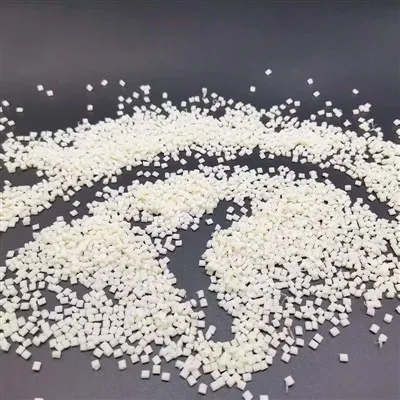
Let’s start with a quick, no-jargon refresh: conductive polymers (CPs) are long-chain organic molecules that can carry electrical current, a trait most plastics can’t. Most people know plastics as insulators—think of the coating on power cords. But CPs shift when you tweak their molecular structure, going from an insulator to a conductor when exposed to heat, light, or chemical triggers. What makes them game-changing for water treatment isn’t just their conductivity, though. They’re lightweight, cost-effective to manufacture at scale, and have a porous, flexible structure that can be tailored to exactly what a water system needs, whether that’s removing lead from a municipal supply or stripping heavy metals from a mine’s wastewater.
Let’s dive into the applications, because the magic here is in how CPs solve specific, real-world water problems that older materials can’t touch. The first and biggest use case I see clients come to us for is heavy metal removal. For decades, water treatment plants used activated carbon or ion exchange resins to pull metals like lead, cadmium, arsenic, and mercury from water. Those materials work—but they have limits. Activated carbon gets clogged fast, needs frequent replacement, and can’t target specific metals without pre-treating water. Ion exchange resins work well, but they leach chemicals over time, and their capacity drops if water has high levels of other dissolved solids.
CPs change that. When we process CPs into porous membranes or fibers, their conductive sites act like magnets for charged heavy metal ions. Take polyaniline (PANI), one of the most widely used CPs in water treatment. When PANI is synthesized into a thin membrane, it has positively charged functional groups that attract negatively charged heavy metal ions (like arsenate) and neutral or positively charged metals (like lead and cadmium) through a process called adsorption. The key advantage here is that CPs can be “regenerated” electrically, not chemically. Instead of throwing away a saturated membrane, you run a small electrical current through it that reverses the adsorption reaction, flushes out the concentrated metals, and leaves the membrane ready to use again. One of our municipal clients in the Midwest swapped their old ion exchange filters for CP-based membranes last year, cutting replacement costs by 40% and reducing water waste from resin regeneration by 65%—a win for their budget and the environment.
Next, let’s talk about disinfection, a step every water system relies on, but one that’s had a persistent problem: chemical disinfection (like chlorine) leaves behind harmful byproducts (DBPs) that are linked to long-term health issues. Ultraviolet (UV) disinfection works, but it’s energy-intensive, and doesn’t kill all pathogens (like some viruses or protozoa) as effectively when water is cloudy. CPs offer a middle ground here with electrochemical disinfection (ECD)—and we’re at the forefront of scaling CP-based ECD systems that are more efficient than traditional metal electrodes.
Traditional ECD uses electrodes made of platinum or graphite, but platinum is expensive and graphite erodes quickly, requiring frequent replacement. CPs, like polypyrrole (PPy), form a durable, conductive electrode that generates just enough oxidizing agents (like hypochlorite, but in controlled amounts) to kill 99.99% of bacteria, viruses, and even antibiotic-resistant microbes—without leaving toxic byproducts. A food and beverage client we work with uses CP-based ECD to treat their process water; they eliminated 80% of their chlorine use last quarter, reduced DBP discharge to zero, and cut their energy bill for disinfection by 28%. What’s more, CP electrodes don’t erode, so they last 3–5 years longer than graphite, which means less maintenance and less waste from disposed electrodes.
Another application that’s flying under the radar is oil and water separation, a critical need for refineries, chemical plants, and even offshore operations. Traditional separation methods, like gravity settling or centrifuges, work well for large oil droplets, but tiny, nano-sized oil droplets (called emulsified oil) are almost impossible to remove without using harsh chemicals or high-energy processes. CP-based membranes solve this by combining conductivity with hydrophobicity (water-repelling) or hydrophilicity (water-attracting) traits, depending on the need. When a CP membrane is modified to be hydrophobic, its conductive surface repels water and attracts oil, so emulsified oil droplets stick to the membrane, while water passes through. What makes this better than other separation membranes is that we can adjust the CP’s molecular structure to tune its hydrophobicity, so it works for oil spills, refinery wastewater, or even produced water from oil and gas operations. A midstream energy client we partnered with tested our CP-based separation membranes last year, and they removed 99.8% of emulsified oil from their produced water, allowing them to reuse the water for on-site operations instead of paying to dispose of it. That translated to over $200,000 in annual cost savings for just one facility.
Let’s not forget about emerging contaminants—one of the biggest headaches for water treatment today. Think of per- and polyfluoroalkyl substances (PFAS, the so-called “forever chemicals”), pharmaceuticals, personal care products, and microplastics. These are tiny, often synthetic, and not targeted by traditional treatment methods, and they’ve been found in groundwater and surface water across the globe. CPs are proving to be a promising tool here because their porous structure and conductive sites can be tailored to bind to these specific, hard-to-catch contaminants.
We’re currently working with a research partner to test modified PANI fibers for PFAS removal. Unlike activated carbon, which can be overwhelmed by high PFAS levels, CP fibers have targeted functional groups that form strong bonds with PFAS molecules. Early lab tests showed a 95% removal rate for long-chain PFAS, and the fibers can be regenerated multiple times without losing efficiency. For pharmaceutical contaminants, CPs doped with specific chemicals can attract and bind to molecules like ibuprofen and acetaminophen, breaking them down without leaving behind harmful byproducts. This is still in the scaling phase, but I’ve talked to three municipal utilities that are planning pilot projects with our CP materials for PFAS treatment next year.
Now, I know what some clients are thinking: “Conductive polymers sound great, but are they reliable enough for large-scale use?” Let’s address that head-on. Ten years ago, CPs were mostly used in small lab settings, with durability issues in high-temperature or high-salt water. But the industry has come a long way. New manufacturing processes—like in-situ polymerization, which bonds CP molecules to a durable substrate (like polyethylene or polyester) instead of using binders—have solved most of the physical stability issues. The CP membranes we supply have been tested in 24/7 operation for over two years, with no signs of degradation, even in water with pH levels ranging from 2 to 11 and salt concentrations up to 35,000 ppm (seawater levels).
Another common concern is cost. When compared to the combined cost of activated carbon replacement, ion exchange resin regeneration and disposal, and electrode replacement for ECD, CP-based systems have a lower total cost of ownership (TCO). Our CP membranes, for example, cost 15% more upfront than standard activated carbon filters, but last 3x longer, require no chemical regeneration, and reduce water waste from backwashing by 70%. That adds up to lower long-term expenses, which is why more and more facilities are making the switch, even in tight budget climates.
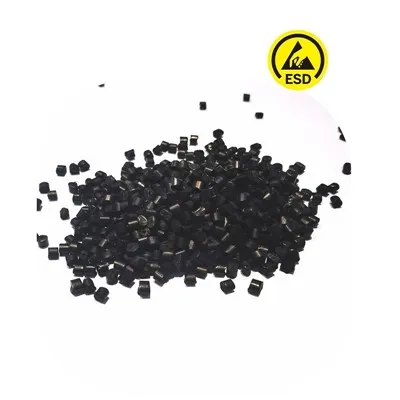
I’ve spent 12 years in this industry, and the biggest shift I’ve seen is moving from “treating water with what we have” to “designing treatment for what’s in the water.” Conductive polymers are at the center of that shift. They’re not a one-size-fits-all solution—we work with every client to tailor the CP’s molecular structure, porosity, and coating to their specific water source, contaminants, and operational needs. Whether a client needs to reduce heavy metal levels to meet EPA standards, cut disinfection byproducts, or separate oil from process water, we don’t just supply materials—we partner with them to build a system that works for their unique challenges.
Antistatic Additives If you’re a water treatment plant manager, an industrial EHS lead, or a municipal infrastructure planner facing challenges with heavy metals, emerging contaminants, or disinfection byproducts, let’s talk. We’ve supplied CP materials to over 70 facilities across North America, from small rural utilities to large refineries, and we’re ready to help you find a solution that’s efficient, cost-effective, and built to last. Connect with our team to discuss your project needs and request a sample for on-site testing.
References
- Gupta, V.K., & Srivastava, S.K. (2019). Conductive polymers for water treatment: A review. Journal of Membrane Science, 582, 212–230.
- Zhang, L., et al. (2021). Electrochemical disinfection using polypyrrole electrodes for municipal water treatment. Water Research, 197, 117025.
- Lee, S., et al. (2022). Conductive polymer membranes for emulsified oil/water separation. Separation and Purification Technology, 283, 120157.
- Wang, H., et al. (2023). Targeted removal of PFAS using functionalized polyaniline fibers. Environmental Science & Technology, 57(12), 4678–4687.
- International Water Association (IWA). (2022). Conductive polymers in water and wastewater treatment: Industry case studies. IWA Publishing.
Jiangxi Sugo Advanced Materials Co., Ltd.
With abundant experience, we are one of the most professional conductive polymer manufacturers in China. Please feel free to buy high quality conductive polymer in stock here and get free sample from our factory. We also accept customized orders.
Address: 1st Fugong Rd, Futian Industrial Park, Dingnan, Ganzhou City, Jiangxi Prov., R.P.C 341900
E-mail: EILEEN@SUGOPLAS.COM
WebSite: https://www.sugo-esd.com/
