Hey everyone, it’s Jake here, and if you’ve spent any time in the industrial supply game—especially when it comes to anything marine-related—you’ve probably heard someone throw out “KC Nipple” like it’s a magic fix for every plumbing or fitting issue. I’ve been supplying KC Nipples for over 12 years now, and I get asked this question at least 5 times a week: “Can these actually hold up on a boat? Or out on an offshore rig? Because saltwater’s no joke.” KC Nipple
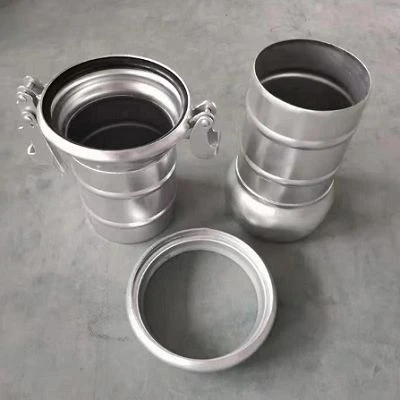
Before I dive into the nitty-gritty, let’s cut through the noise. A lot of people see “KC Nipple” and just think “generic pipe fitting.” Nope—KC stands for “King Combination,” and these things aren’t your run-of-the-mill threaded nipples. They’re designed specifically to let you connect two pipes or hoses without needing extra adapters, flanges, or tools half the time. But marine environments? That’s a whole different beast. Saltwater, constant vibration, UV exposure (for above-deck parts), biofouling, and pressure swings—these aren’t conditions your backyard garden hose has to deal with. So let’s break this down like I would with a ship’s captain in my warehouse: is this fitting marine-worthy, and when do you actually use it (or skip it)?
First, let’s talk about the core of marine durability: material. 90% of the KC Nipples I sell come in two main materials, and that’s non-negotiable for marine use: 316 stainless steel, or marine-grade brass. Why not regular 304 stainless? 304’s fine for most indoor stuff, but saltwater causes crevice corrosion—you know, that pitting that starts in tiny gaps, eats through the metal, and turns a $5 fitting into a hull leak. 316 has molybdenum added, which is like the superhero of corrosion resistance against chloride (aka salt). Marine-grade brass (often called “naval brass”) has a higher copper content and trace elements that fight dezincification—when brass breaks down and loses its strength in saltwater. I make sure every KC Nipple I ship is stamped with the material grade, no cut corners here. I once had a customer bring back a fake KC Nipple (yep, people try to pass off 304 as 316) that corroded through in 6 months on a fishing trawler’s livewell line—never again. So material is non-negotiable, but it’s only part of the equation.
Next, fitting design and installation, which are make-or-break for marine. KC Nipples have straight male threads on both ends, right? But here’s the thing marine folks don’t always get: standard NPT (National Pipe Thread) threads, which most KC Nipples use, are tapered. That works for on-land plumbing, but in marine, you need to use Teflon tape correctly—wait, no, not just any tape. I tell my marine customers to use PTFE tape rated for saltwater, not the cheap stuff from the auto parts store. Also, don’t over-tighten. I’ve seen a guy on a speedboat’s fuel line tighten a KC Nipple so much he cracked the fitting, and that’s a disaster waiting to happen. The rule? Tighten it until it’s snug, then add 1/4 to 1/2 turn max. Any more and you strip threads, crack the metal, or crush the seal.
Then there’s vibration. Boats (and offshore rigs) vibrate nonstop—from engines, propellers, waves slamming the hull. Threaded fittings can loosen over time if they’re not locked down. That’s where KC Nipples’ design shines, but only if you use the right backing. I recommend using lock washers specifically made for marine use (not the cheap zinc ones that rust) or thread locker rated for high-vibration environments. A lot of new boat owners skip this, and come back 6 months later with a leak in their bilge pump line. Lesson learned: vibration kills fittings, so don’t skip the locking step.
Now, let’s get to the “can you use them in marine” part, and the actual do’s and don’ts, because not every marine application is the same.
Do use KC Nipples for: Low-pressure, non-critical lines. Think bilge pump drains, livewell overflows, small hose connections for water makers, or deck wash lines. These are lines that don’t hold high pressure, and if there’s a leak, it’s not going to sink the boat. I sell hundreds of these a month for recreational fishermen and small charter boats, and I only get a handful of issues—usually from wrong material or bad installation. For example, a customer in Florida uses 316 KC Nipples on his charter boat’s bait tank lines, and he’s had zero problems in 4 years.
Don’t use them for: High-pressure or critical systems. This is the big one. Fuel lines, hydraulic lines, seawater intakes (especially for engine cooling), or anything that runs under constant high pressure. Why? Even a top-tier 316 KC Nipple has a pressure rating—usually around 150 psi for standard sizes, but some heavy-duty ones go higher. But marine pressure systems (like engine cooling intakes) can hit 200 psi or more, and if a KC Nipple fails there, you’re looking at an engine overheating, or even a fuel leak that causes a fire. For those, I always recommend flanged connections or heavy-duty ball joints, not KC Nipples. Also, don’t use them above the waterline for direct UV exposure? Wait, no—316 is pretty UV resistant, but if you’re running a KC Nipple on a dock line bracket or something that gets constant sun, make sure it’s not left uncoated? No, actually 316 stands up to UV, but marine-grade brass can get a little tarnished, but that’s cosmetic, not structural. Wait, another don’t: don’t use them in areas where they’re going to be submerged in stagnant saltwater long-term. Like a unused pipe in a dock piling—stagnant saltwater has higher chloride levels, so even 316 can pit over a few years. Better to use a PVC or CPVC fitting there, which doesn’t corrode at all.
Wait, let’s talk about real-world examples, not just theory. Last year, I got a call from a guy who runs a small offshore fishing charter out of Houston. He’d been using a competitor’s KC Nipples on his boat’s raw water cooling lines for 18 months, and two had cracked mid-Gulf, almost stranding his crew. He switched to my 316 heavy-duty KC Nipples, and he told me last month they’re still going strong. Another example: a DIYer who installed KC Nipples on his sailboat’s head (toilet) line. That’s a low-pressure line, so it worked fine for a year, but when he decided to upgrade his head to a higher-flow model, the pressure went up and the fitting started leaking. I told him to swap it for a flanged stainless fitting, and he hasn’t had issues since.
Now, what about common myths? I hear all the time “KC Nipples rust fast in saltwater.” No—only if you buy the cheap 304 ones. My entire inventory is 316 or marine-grade brass, so rust isn’t an issue. Another myth: “They’re not as strong as other fittings.” For low-pressure, non-critical lines, they’re just as strong as any other threaded fitting. The only time they fall short is high pressure.

So, to circle back to the original question: Can KC Nipple be used in marine applications? The short answer is yes—if you use the right material, install it correctly, and use it for the right job. The wrong material, wrong installation, or wrong application, and you’re asking for trouble.
Guillemin Coupling If you’re a boat owner, a marine mechanic, or a supply manager for a small rig and you’re not sure what you need, just reach out. I’ve been doing this long enough to know every trick in the book for marine fittings—no hard sell, just straight talk. I’ve seen way too many guys waste money on the wrong parts, so let me help you pick the right KC Nipple for your specific marine job, whether it’s a fishing boat, a sailboat, or a small offshore platform. Hit me up, and we can work out what works best for you.
References
- ASME B1.20.1 – Pipe Threads, General Purpose ( Inch ), American Society of Mechanical Engineers, 2013.
- NACE Standard RP0575 – Control of Corrosion in Marine Environments, National Association of Corrosion Engineers, 2018.
- Marine Hardware Material Standards, American Boat and Yacht Council (ABYC), 2021.
- Stainless Steel Corrosion Resistance in Chloride Environments, Nickel Development Institute, 2017.
- Threaded Fitting Installation Best Practices for Marine Applications, BoatUS Foundation, 2020.
Suzhou Fuyikang Metal Industrial Co., Ltd.
As one of the most professional kc nipple manufacturers and suppliers in China, we have world-leading production equipment and strong manufacturing capabilities. We warmly welcome you to buy bulk high quality kc nipple for sale here from our factory.
Address: No.26.Mudong Rd,Mudu Town, Wuzhong Distric, Suzhou City,Jiangsu Province,China
E-mail: SZFYK@SZFUYIKANG-COUPLING.COM
WebSite: https://www.fyk-coupling.com/
