As a supplier of paper carrier tape, I’ve been constantly intrigued by how our product performs in different environments. High – altitude environments, with their unique set of conditions, pose an interesting case study. In this blog, I’ll delve into the performance of paper carrier tape in high – altitude settings, exploring the scientific aspects and practical implications. Paper Carrier Tape
Understanding High – Altitude Environments
High – altitude areas are characterized by several key factors that can significantly impact the performance of materials. The most prominent ones are low air pressure, reduced oxygen levels, lower temperatures, and increased exposure to ultraviolet (UV) radiation. These conditions can cause materials to expand, contract, degrade, or experience changes in their physical and chemical properties.
Low air pressure at high altitudes means that there are fewer air molecules per unit volume. This can lead to a phenomenon known as outgassing, where volatile substances within the paper carrier tape are released more readily. Outgassing can be a problem as it may leave residues on the components carried by the tape, potentially affecting their functionality.
Reduced oxygen levels can also influence the performance of paper carrier tape. Oxygen is involved in many chemical reactions, including the oxidation of materials. In a low – oxygen environment, the rate of oxidation may slow down, which can be beneficial for the long – term stability of the tape. However, it can also affect the adhesion properties if the adhesive used in the tape relies on oxygen – dependent curing processes.
Lower temperatures are another characteristic of high – altitude environments. Cold temperatures can make the paper carrier tape more brittle, increasing the risk of cracking or breaking during handling and transportation. The adhesive may also lose its flexibility and adhesion strength in cold conditions, leading to components detaching from the tape.
Increased UV radiation at high altitudes can cause the paper to fade, become brittle, and lose its structural integrity over time. UV rays can break down the chemical bonds in the paper fibers, weakening the tape and reducing its ability to hold components securely.
Physical and Chemical Properties of Paper Carrier Tape
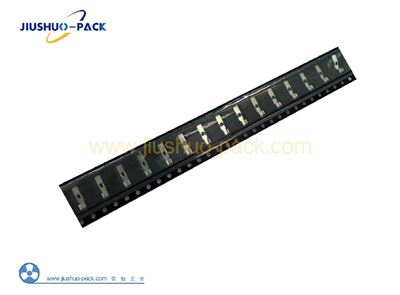
Paper carrier tape is typically made from a combination of paper substrates and adhesives. The paper substrate provides the structural support, while the adhesive is responsible for holding the components in place.
The type of paper used in the tape can vary, but common choices include kraft paper, which is known for its strength and durability. The paper’s porosity, moisture content, and fiber structure can all influence its performance in high – altitude environments. For example, a paper with high porosity may be more susceptible to outgassing, as it can trap more volatile substances.
Adhesives used in paper carrier tape can be either pressure – sensitive adhesives (PSAs) or heat – activated adhesives. PSAs are the most commonly used, as they are easy to apply and provide good adhesion at room temperature. However, in high – altitude environments, the performance of PSAs can be affected by the low air pressure and cold temperatures. Cold temperatures can reduce the tackiness of the adhesive, while low air pressure may cause the adhesive to flow or creep more easily.
Performance Testing in High – Altitude Environments
To understand how paper carrier tape performs in high – altitude environments, we conducted a series of tests. We simulated high – altitude conditions in a laboratory setting, adjusting the air pressure, temperature, and UV radiation levels to mimic those found at high altitudes.
We tested the outgassing properties of the tape by placing samples in a vacuum chamber to simulate low air pressure. The samples were then analyzed for any volatile organic compounds (VOCs) released over a period of time. Our results showed that certain types of paper carrier tape with higher porosity and more volatile additives were more prone to outgassing.
To test the impact of low temperatures, we exposed the tape to sub – zero temperatures and then flexed the samples to check for cracking or breaking. We found that tapes with a more brittle paper substrate or an adhesive that lost its flexibility at low temperatures were more likely to fail.
In terms of UV resistance, we exposed the tape samples to UV lamps for an extended period. Visual inspection and strength tests were conducted to assess the degree of degradation. Tapes with UV – resistant coatings or additives showed less fading and better retention of their mechanical properties compared to those without such protection.
Practical Implications for High – Altitude Applications
The performance of paper carrier tape in high – altitude environments has several practical implications. In industries such as aerospace and telecommunications, where components are often used in high – altitude settings, the reliability of the tape is crucial.
For aerospace applications, components need to be securely held in place during launch and flight. If the paper carrier tape fails due to brittleness or loss of adhesion at high altitudes, it can lead to component misalignment or detachment, which can have serious consequences for the operation of the aircraft or satellite.
In telecommunications, high – altitude platforms such as drones and balloons are increasingly being used for wireless communication. Paper carrier tape used to transport and position communication components in these platforms must be able to withstand the harsh high – altitude conditions to ensure reliable signal transmission.
Customizing Paper Carrier Tape for High – Altitude Applications
Based on our research and testing, we can offer customized paper carrier tape solutions for high – altitude applications.
To address the issue of outgassing, we can use low – VOC paper substrates and adhesives. These materials are specially formulated to release fewer volatile substances, reducing the risk of residue formation on the components.
For cold – temperature resistance, we can select paper substrates with higher flexibility and adhesives that maintain their tackiness at low temperatures. We can also add heat – retaining layers or coatings to the tape to protect it from the cold.
To enhance UV resistance, we can apply UV – resistant coatings or use paper substrates with built – in UV stabilizers. These measures can significantly extend the lifespan of the tape in high – altitude environments where UV radiation is more intense.
Conclusion

In conclusion, paper carrier tape can face a range of challenges in high – altitude environments due to low air pressure, reduced oxygen levels, lower temperatures, and increased UV radiation. However, through careful material selection, customization, and performance testing, we can develop paper carrier tape solutions that are well – suited for these harsh conditions.
Cover Tape If you are involved in industries that require paper carrier tape for high – altitude applications, I encourage you to contact us to discuss your specific needs. Our team of experts is ready to provide you with the best possible solutions and support to ensure the reliable performance of your components in high – altitude settings.
References
- ASTM International standards on material testing in extreme environments
- Research papers on the effects of high – altitude conditions on packaging materials
- Industry reports on the use of paper carrier tape in aerospace and telecommunications
Dongguan Jiushuo Industrial Co., Ltd.
As one of the most professional paper carrier tape manufacturers and suppliers in China, we also support customized service. Please feel free to buy high quality paper carrier tape made in China here from our factory. Contact us for more details.
Address: 11th Floor, Building 2, Chuangfu Center, Chashan Town, Dongguan City, Guangdong Province, China
E-mail: sales06@zaidaiw.com
WebSite: https://www.carriertape-pack.com/
